
Demonstration artifact: The examples below analyze a fictional city-transit poster so visitors can see how all eight lenses work together. Replace the example with a real artifact when publishing an investigation.
Investigation Overview
Introduce the artifact and explain why it matters.
Use this space for a short opening overview. Describe what the artifact is, where it appeared, why it deserves investigation, and what central question the analysis will explore.
Identify and describe what is being examined.
Begin with careful observation before interpretation. Name the artifact, medium, creator when known, and the specific details that make it significant.
- What form does the artifact take?
- What details are most visible or repeated?
- What has been selected, arranged, or omitted?
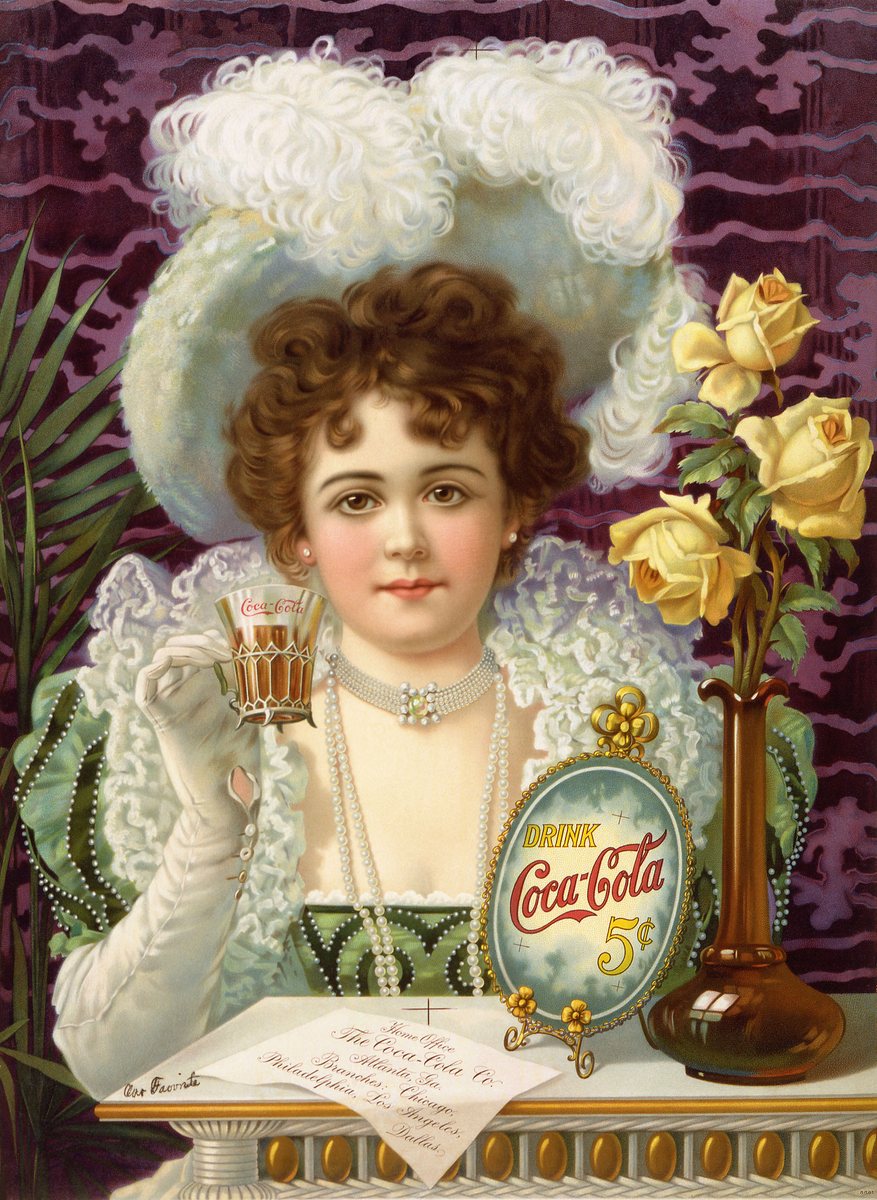
This chromolithographic advertisement can be examined first as a material and visual artifact. Its elaborate clothing, flowers, pearls, decorative furniture, scripted brand name, and five-cent price combine luxury with affordability. Before deciding what the advertisement means, an investigator can record its medium, typography, color palette, posed model, product placement, and signs of mass printing.
“The medium is the message.”
Marshall McLuhan, Understanding Media (1964)
Future Symbol Wizard investigations will explore artifacts from popular culture using this analytical lens.
Advertising Campaigns
How brands shape identity and desire.
Movie Scenes
Heroes, myths, symbolism, and storytelling.
Internet Memes
Humor, persuasion, and cultural meaning.
Music Videos
Visual rhetoric and emotional framing.
Political Speeches
Language, power, and public identity.
AI Generated Media
Authenticity, creativity, and truth.
Complete investigations and teaching resources coming soon.
Explain the world that produced the artifact.
Consider the historical moment, cultural environment, technology, institutions, and events surrounding its creation and circulation.
- When and where was it produced?
- What social conditions shaped it?
- What earlier events or traditions does it reference?
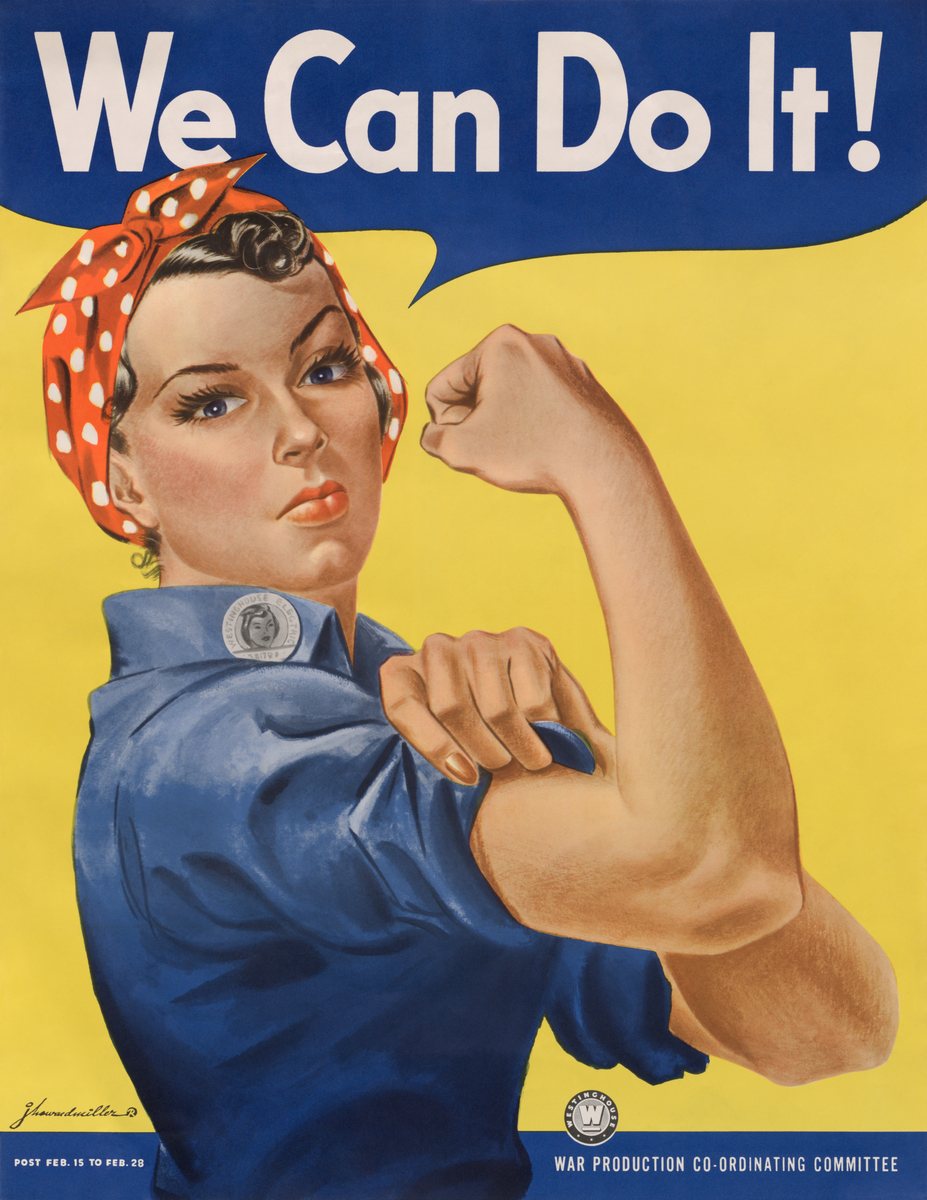
The poster’s meaning changes when placed within the United States’ World War II production campaign. It was created for an internal Westinghouse workforce context rather than originally as a broad feminist slogan. Later popular culture detached the image from that immediate workplace setting and recirculated it as a symbol of women’s strength. Context analysis distinguishes the artifact’s original purpose from its later cultural life.
“Man is an animal suspended in webs of significance he himself has spun.”
Clifford Geertz, The Interpretation of Cultures (1973)
Future Symbol Wizard investigations will explore artifacts from popular culture using this analytical lens.
Advertising Campaigns
How brands shape identity and desire.
Movie Scenes
Heroes, myths, symbolism, and storytelling.
Internet Memes
Humor, persuasion, and cultural meaning.
Music Videos
Visual rhetoric and emotional framing.
Political Speeches
Language, power, and public identity.
AI Generated Media
Authenticity, creativity, and truth.
Complete investigations and teaching resources coming soon.
Examine who is invited to see, believe, feel, or act.
Identify the intended audience as well as unexpected audiences. Consider what knowledge, values, identities, and experiences the message assumes.
- Who appears to be addressed directly?
- Who might interpret it differently?
- Who is ignored, excluded, or misrepresented?
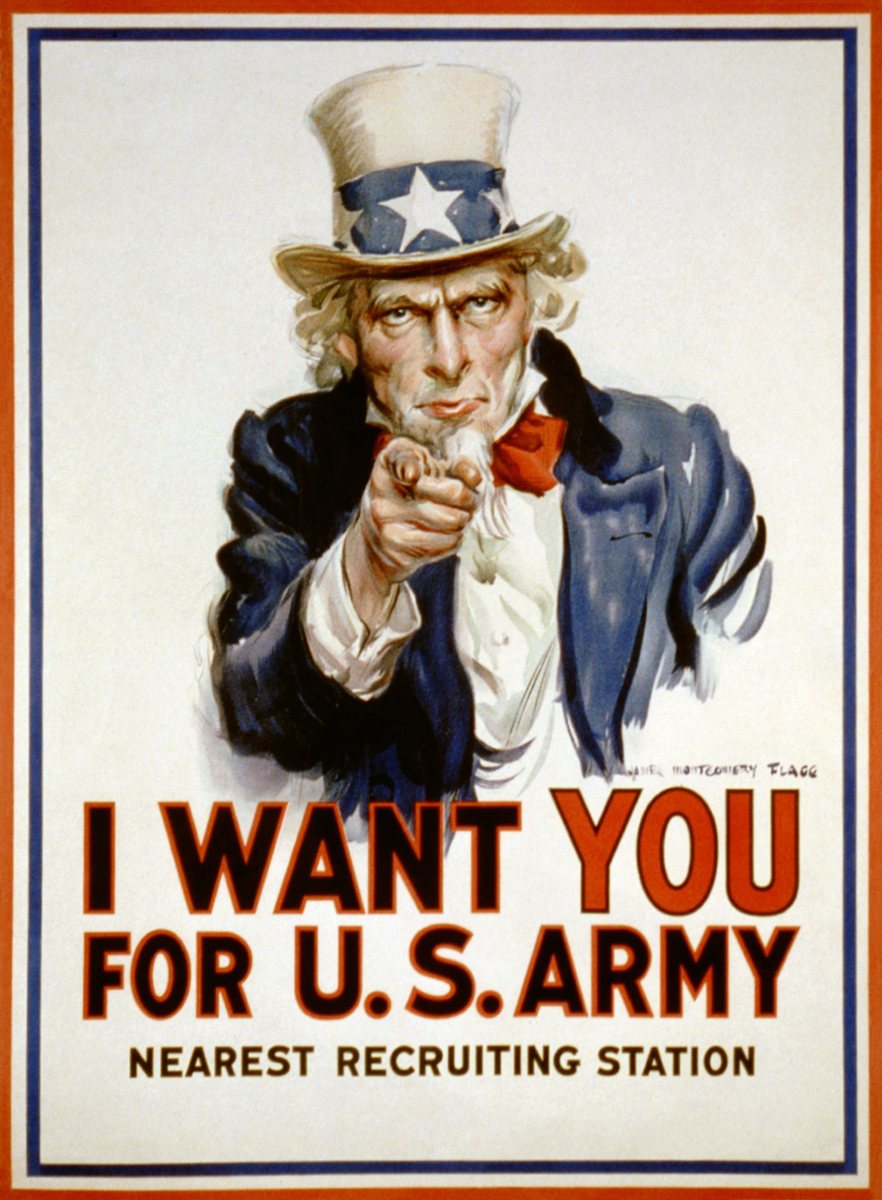
The pointing hand, direct gaze, second-person word “you,” and blank space for a local recruiting station construct an audience of individual men who can be personally called into national service. The poster does not merely announce recruitment; it positions the viewer as already seen and morally accountable. Different audiences may read that address as patriotic duty, pressure, historical propaganda, or a familiar popular-culture meme.
Audiences decode messages through social position, experience, and cultural knowledge.
Paraphrasing Stuart Hall’s encoding/decoding model (1980)
Future Symbol Wizard investigations will explore artifacts from popular culture using this analytical lens.
Advertising Campaigns
How brands shape identity and desire.
Movie Scenes
Heroes, myths, symbolism, and storytelling.
Internet Memes
Humor, persuasion, and cultural meaning.
Music Videos
Visual rhetoric and emotional framing.
Political Speeches
Language, power, and public identity.
AI Generated Media
Authenticity, creativity, and truth.
Complete investigations and teaching resources coming soon.
Interpret the meanings carried by words, images, sounds, and forms.
Trace important colors, objects, metaphors, characters, settings, gestures, and recurring patterns to their cultural associations.
- Which symbols organize the message?
- Where did those meanings come from?
- Are the symbols stable, contested, or being transformed?

Earthrise is a photograph, but it also became a symbol. The bright, finite Earth appears small against black space and the barren lunar surface. That contrast helped the image signify planetary unity, environmental vulnerability, scientific achievement, and a perspective beyond national borders. Symbol analysis asks how a literal photograph acquires meanings far beyond the moment it records.
“Myth is a type of speech.”
Roland Barthes, Mythologies (1957)
Future Symbol Wizard investigations will explore artifacts from popular culture using this analytical lens.
Advertising Campaigns
How brands shape identity and desire.
Movie Scenes
Heroes, myths, symbolism, and storytelling.
Internet Memes
Humor, persuasion, and cultural meaning.
Music Videos
Visual rhetoric and emotional framing.
Political Speeches
Language, power, and public identity.
AI Generated Media
Authenticity, creativity, and truth.
Complete investigations and teaching resources coming soon.
Identify the feelings the artifact activates.
Examine how language, imagery, music, pacing, memory, humor, fear, hope, anger, nostalgia, or beauty guide interpretation.
- What emotions appear first?
- How are those emotions produced?
- What response or action do the feelings encourage?

Dorothea Lange’s composition centers a worried face while the children turn away, directing attention toward uncertainty, care, exhaustion, and responsibility. The photograph became emotionally powerful partly because viewers can recognize both individual suffering and a larger social crisis. Emotional analysis should also ask whether empathy opens understanding or reduces a complex person to a symbol of hardship.
Emotion directs attention toward what appears urgent, valuable, or threatened.
Analytical principle informed by affect and visual-rhetoric scholarship
Future Symbol Wizard investigations will explore artifacts from popular culture using this analytical lens.
Advertising Campaigns
How brands shape identity and desire.
Movie Scenes
Heroes, myths, symbolism, and storytelling.
Internet Memes
Humor, persuasion, and cultural meaning.
Music Videos
Visual rhetoric and emotional framing.
Political Speeches
Language, power, and public identity.
AI Generated Media
Authenticity, creativity, and truth.
Complete investigations and teaching resources coming soon.
Ask who benefits, who is represented, and who disappears.
Look for authority, ownership, institutional support, social hierarchy, framing, access, and the ability to define what appears normal or true.
- Who has the power to circulate this message?
- Whose interests are advanced?
- Which alternatives or voices are made less visible?
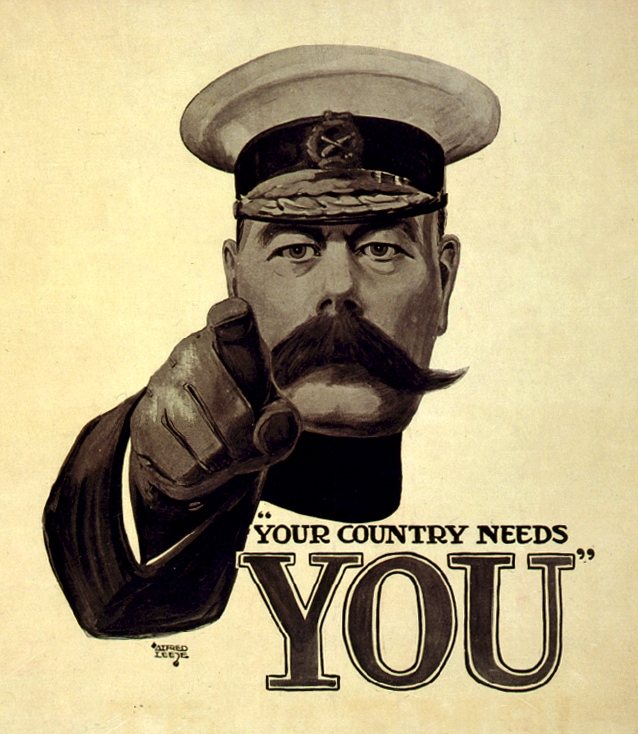
Lord Kitchener’s uniformed figure occupies nearly the entire poster and points outward as though the state itself can see and command the viewer. The phrase “Your Country Needs You” converts institutional military needs into personal obligation. Power analysis examines who has the authority, printing resources, public visibility, and cultural legitimacy to make such a demand—and whose costs or objections remain outside the frame.
“Power is everywhere.”
Michel Foucault, The History of Sexuality, Vol. 1 (1976)
Future Symbol Wizard investigations will explore artifacts from popular culture using this analytical lens.
Advertising Campaigns
How brands shape identity and desire.
Movie Scenes
Heroes, myths, symbolism, and storytelling.
Internet Memes
Humor, persuasion, and cultural meaning.
Music Videos
Visual rhetoric and emotional framing.
Political Speeches
Language, power, and public identity.
AI Generated Media
Authenticity, creativity, and truth.
Complete investigations and teaching resources coming soon.
Evaluate what is supported, uncertain, misleading, or hidden.
Separate claims from evidence. Consider source credibility, framing, missing context, verification, bias, and the difference between persuasion and proof.
- What claims are being made?
- What evidence supports them?
- What additional information would be needed to verify the message?

The Cottingley Fairies photographs appeared convincing to many viewers because photography carried an aura of mechanical truth. The visible image was real as a photograph, but the implied claim—that a fairy had been documented—required evidence beyond the image. Truth analysis separates what a medium visibly records from the interpretation attached to it, then asks about provenance, staging, corroboration, expertise, and incentives to believe.
“Extraordinary claims require extraordinary evidence.”
Carl Sagan, popularized in Cosmos (1980)
Future Symbol Wizard investigations will explore artifacts from popular culture using this analytical lens.
Advertising Campaigns
How brands shape identity and desire.
Movie Scenes
Heroes, myths, symbolism, and storytelling.
Internet Memes
Humor, persuasion, and cultural meaning.
Music Videos
Visual rhetoric and emotional framing.
Political Speeches
Language, power, and public identity.
AI Generated Media
Authenticity, creativity, and truth.
Complete investigations and teaching resources coming soon.
Consider how the artifact could communicate more effectively and ethically.
Move from criticism to creation. Suggest changes to language, imagery, evidence, representation, accessibility, emotional appeals, or audience assumptions.
- What should be preserved?
- What should be revised or removed?
- How could the message increase dignity, understanding, and common ground?
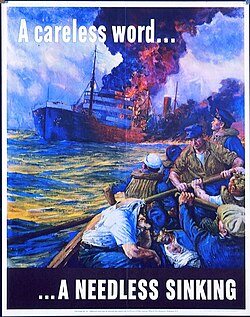
The wartime poster uses catastrophe, rhyme, and fear to demand silence. A contemporary redesign could preserve the memorable warning while shifting from unquestioning obedience toward informed digital responsibility: verify before sharing, protect private information, and understand how posts travel. Reimagining asks what is worth retaining—the concise metaphor and urgency—and what should change for a new ethical purpose, audience, and media environment.
“Education is a process of living.”
John Dewey, My Pedagogic Creed (1897)
Future Symbol Wizard investigations will explore artifacts from popular culture using this analytical lens.
Advertising Campaigns
How brands shape identity and desire.
Movie Scenes
Heroes, myths, symbolism, and storytelling.
Internet Memes
Humor, persuasion, and cultural meaning.
Music Videos
Visual rhetoric and emotional framing.
Political Speeches
Language, power, and public identity.
AI Generated Media
Authenticity, creativity, and truth.
Complete investigations and teaching resources coming soon.
Conclusion
What does the investigation reveal?
Bring the eight lenses together. Explain the most important insight, identify what remains uncertain, and describe how the artifact shapes or reflects the reality around it.
State the central conclusion in one or two clear sentences.
Identify information, perspectives, or sources that would strengthen the investigation.
Link the artifact to History, Politics, Religion, Culture, Technology, Music, Film, Science, or another category.